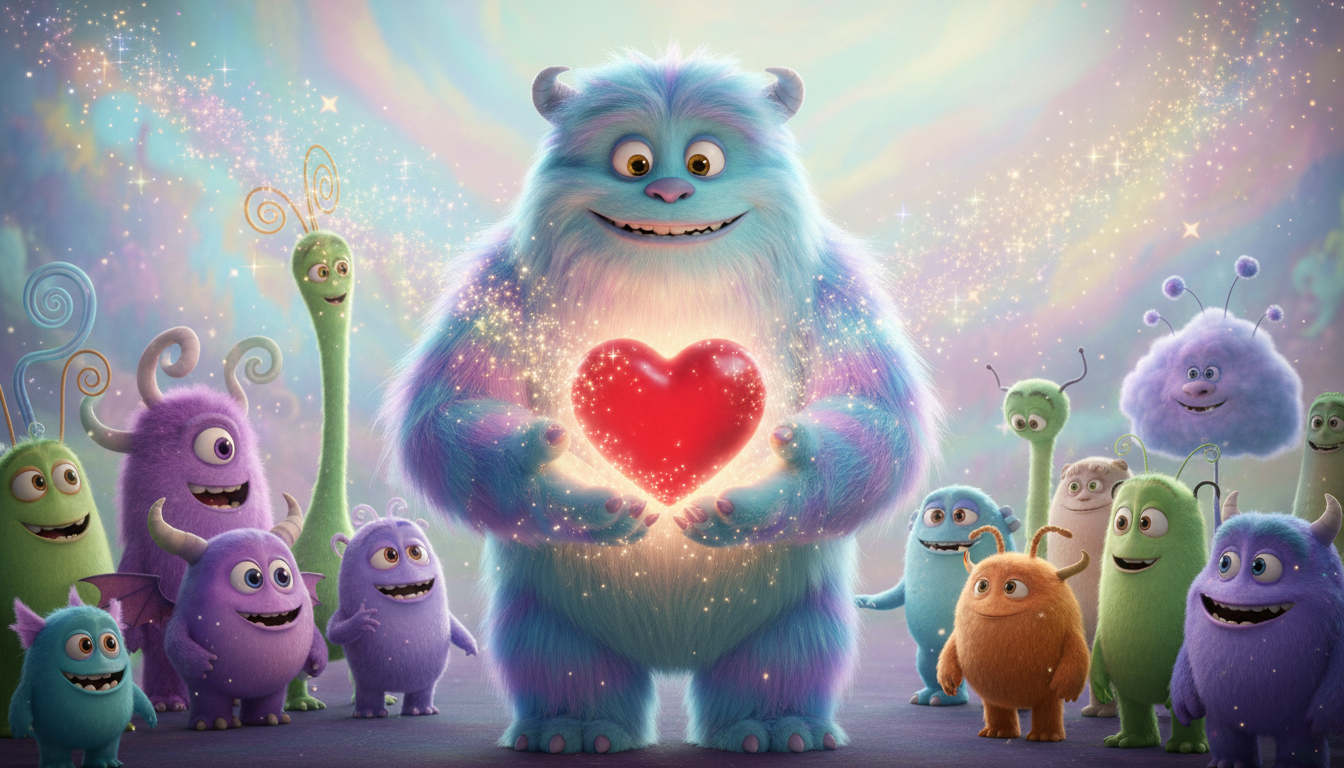
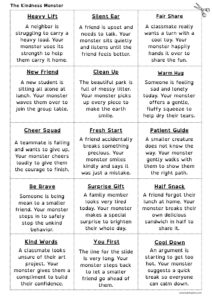
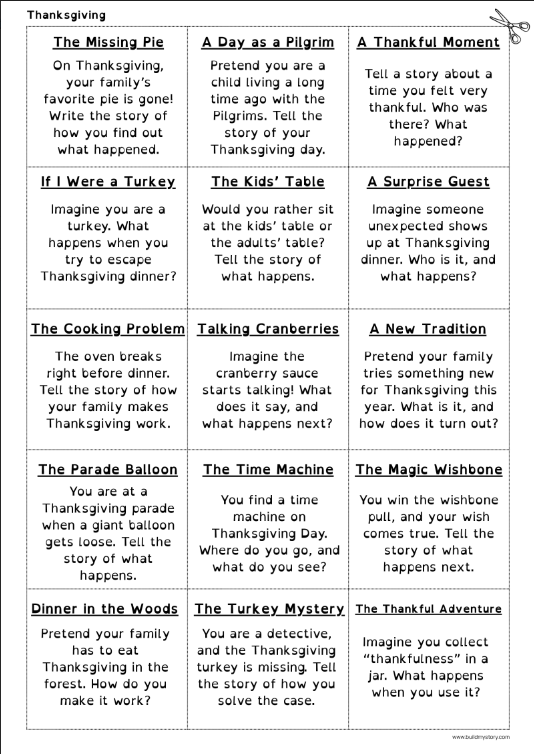
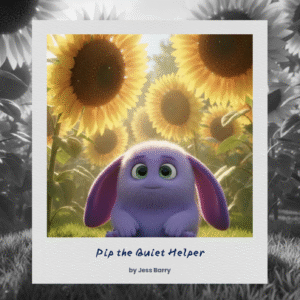
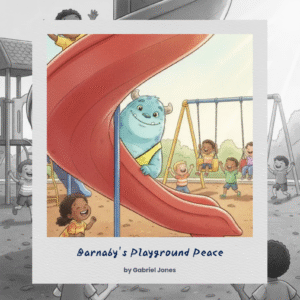
Students invent a one-of-a-kind monster who performs one Random Act of Kindness. They plan, write, and publish an original story in Build My Story. Each student gets a free e-book with optional printed copies.
Short on time? Your class can publish straight away, by using ‘Lesson plan 2’
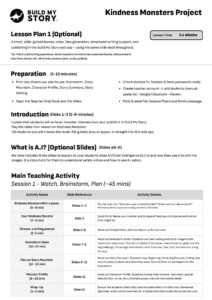
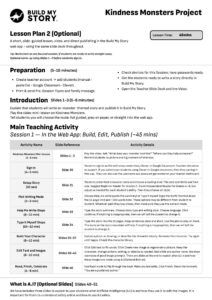
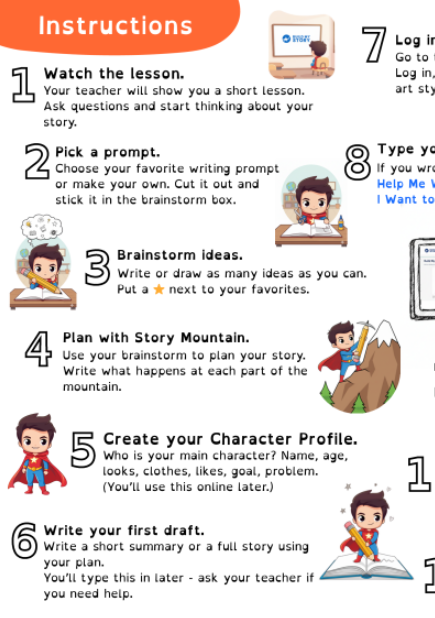
Lesson Plan 1 is the full experience, with 2–3 in-class sessions for writing and reflection. Lesson Plan 2 is for publishing only, if your students already wrote their stories or want to type directly in the web app.
Very little. Print the student pack and slide deck. Lesson Plan 1 runs in 2–3 sessions of 30–45 minutes each, while Lesson Plan 2 can be done fully online in the web app.
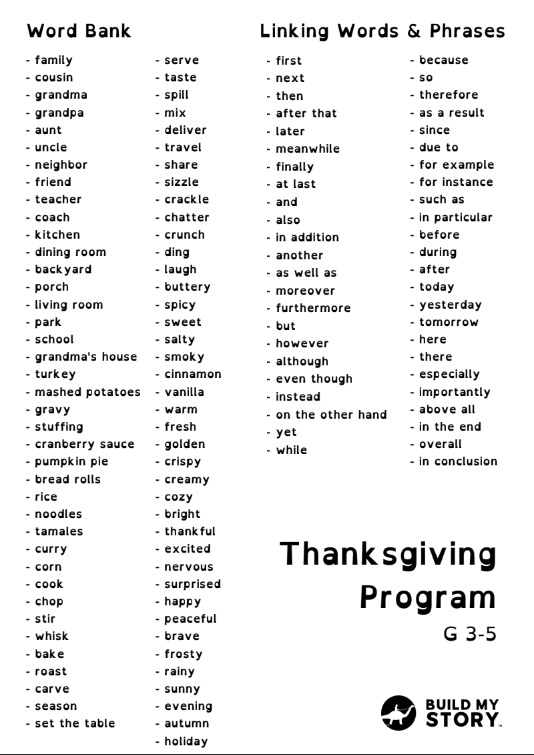
Students write real or imagined kindness-monster adventure stories with a clear sequence of events, descriptive details (sensory language), and a strong ending that shows a specific act of kindness.
Students collaborate in discussions to brainstorm kind acts, give peer feedback, and present their finished monster projects clearly and with appropriate details.
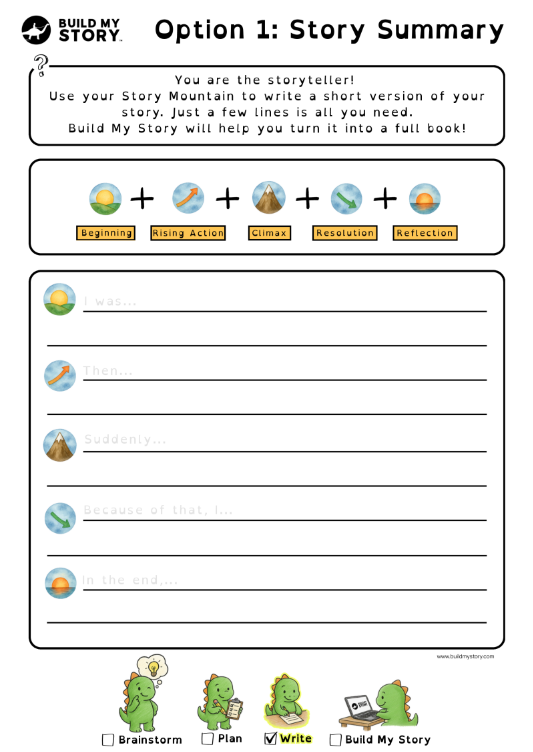
Students use story structure (e.g., “Story Mountain”—beginning, rising action, climax, resolution, ending) from mentor texts to plan and strengthen their own narratives.
Students create and refine a digital book and describe design choices in their project; they discuss how digital tools can influence people and culture and consider ways to improve accessibility/usability for different users.